

Our Heritage
Six Centuries of Authentic Himroo
Preserving the original handwoven Himroo tradition in Aurangabad since the 14th century.
Over time, the name Hum Ruhoo gradually evolved into Himroo, the textile now closely associated with Aurangabad.
Today, authentic Himroo remains a rare heritage fabric still produced on traditional handlooms by skilled artisans.
About Himroo
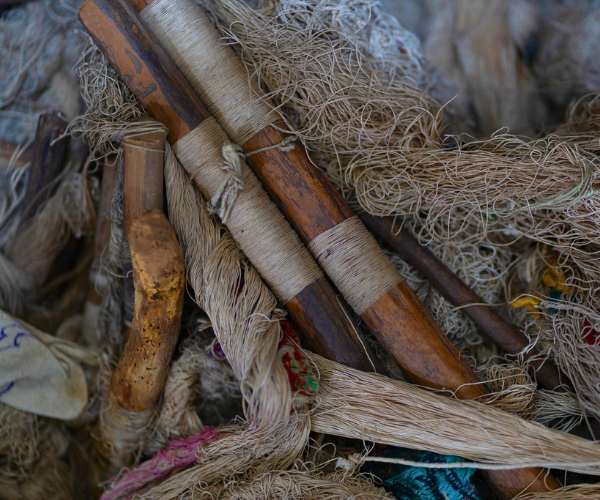
Himroo is a traditional textile craft associated with Aurangabad and is known for its distinctive weaving technique and rich silk cotton composition.
The origins of this weaving tradition within the Qureshi family trace back to master craftsmen Mohammad Hussain Qureshi and his son Mohammad Yaqub Qureshi, who migrated from Persia to Delhi and later to Daulatabad during the reign of Sultan Mohammad bin Tughlaq, when the capital of India was temporarily shifted there. They were part of a group of skilled weavers connected with the royal textile tradition of Kim Khwab, a luxurious fabric woven for royal families.
Kim Khwab fabrics were produced exclusively for royal courts and were known for their intricate patterns and the use of precious materials such as gold and silver threads.
When royal patronage declined, Haji Gulam Ahmad Qureshi and his son Abdul Hameed Qureshi adapted the craft to changing times. The expensive materials of Kim Khwab were replaced with a silk and cotton blend, while the traditional patterns were preserved. This adapted fabric was called “Hum Ruhoo,” a Persian term meaning a replica or likeness of Kim Khwab.
From Kim Khwab to Himroo Medieval Origins
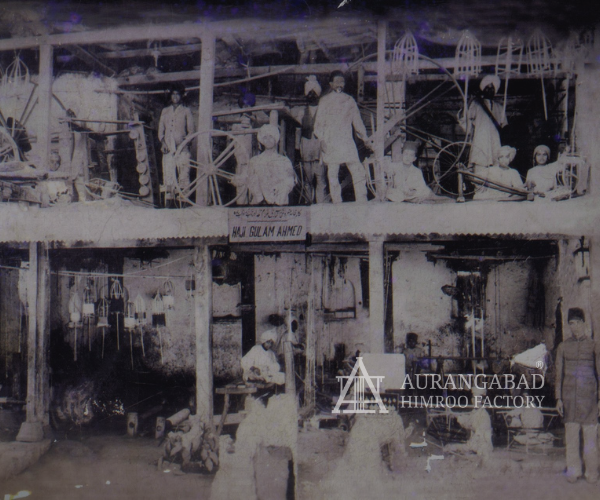
The origins of Himroo in the Deccan trace back to the medieval period, when the capital of the Delhi Sultanate was temporarily shifted from Delhi to Daulatabad during the reign of Sultan Muhammad bin Tughlaq in the 14th century.
During this transition, many skilled craftsmen and weavers migrated with the royal administration and settled in the Deccan region. Among them were master weavers associated with the royal textile tradition of Kim Khwab, a luxurious fabric woven for royal courts.
Even after the capital later returned to Delhi, several artisans remained in the region, continuing their craft and supplying textiles to royal households.
Over time, this weaving tradition developed in the Deccan and later became associated with Mughal and Nizam patronage. The craftsmanship, intricate patterns, and silk-cotton weaving technique gradually came to define the textile known today as Himroo.
Himroo & the Cultural Identity of Aurangabad
Himroo became deeply rooted in the cultural identity of Aurangabad. The region’s silk and cotton resources supported the growth of this craft, while its strategic position along trade routes increased its demand.
For centuries, Himroo from Aurangabad gained recognition for:
- Silk and cotton blend composition
- Distinct Persian inspired motifs
- Strong association with royal and noble use
The craft became an enduring symbol of refinement and textile excellence in the region.
The Royal Era of Himroo
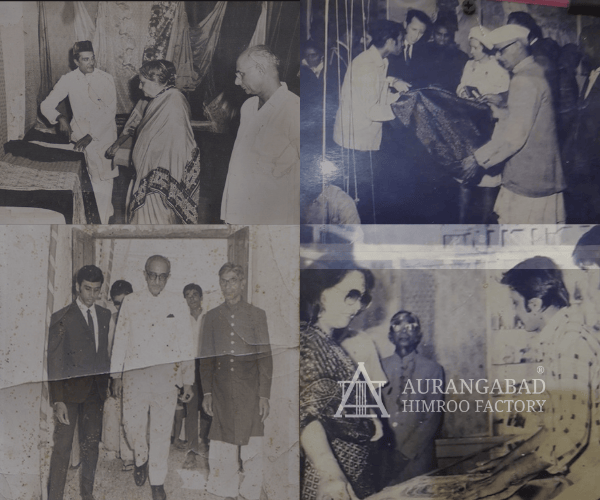
During the Mughal and Nizam periods, Himroo fabrics were highly valued for their elegance and craftsmanship.
Favoured by royal households
Admired for their intricate detailing
Traded across regions
Preserved as luxury textiles
This royal association elevated Himroo to a position of cultural and artistic prestige.
The Authentic Pit & Paga Technique
True Himroo is woven manually using the traditional pit and paga loom.
This system requires two skilled artisans working together, one operating the loom and the other assisting in managing design threads and tension. The coordination between artisans ensures precision in pattern formation.
100% handwoven
Two-artisan loom system
Silk + cotton weaving
Generational himroo craft
This technique distinguishes genuine handwoven Himroo from machine made imitations.
The Qureshi Family Legacy
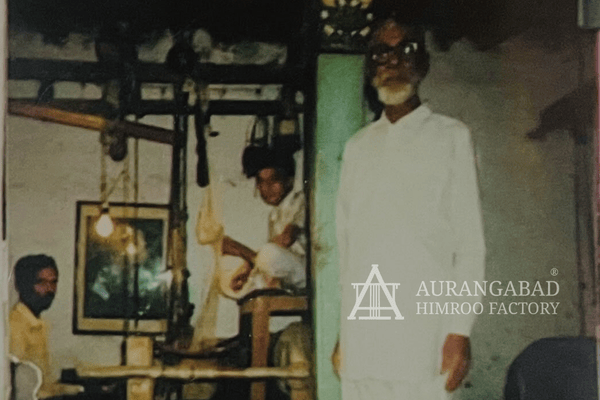
The Qureshi family has preserved the tradition of Himroo weaving across multiple generations.
For over six centuries, the responsibility of sustaining authentic handwoven Himroo has passed from one generation to the next maintaining discipline, skill, and dedication to traditional methods.
Through periods of modernization and industrial competition, the family continued practicing original handloom weaving while protecting the integrity of the craft.
Preserving Himroo for the Future
Aurangabad Himroo Factory remains committed to safeguarding this heritage craft for future generations. Authentic Himroo is not merely a textile of the past, it is a living craft sustained through skill, dedication, and generational knowledge.
“Handwoven. Preserved. Continued.”